How to Build a Capsule Wardrobe From Clothes You Own
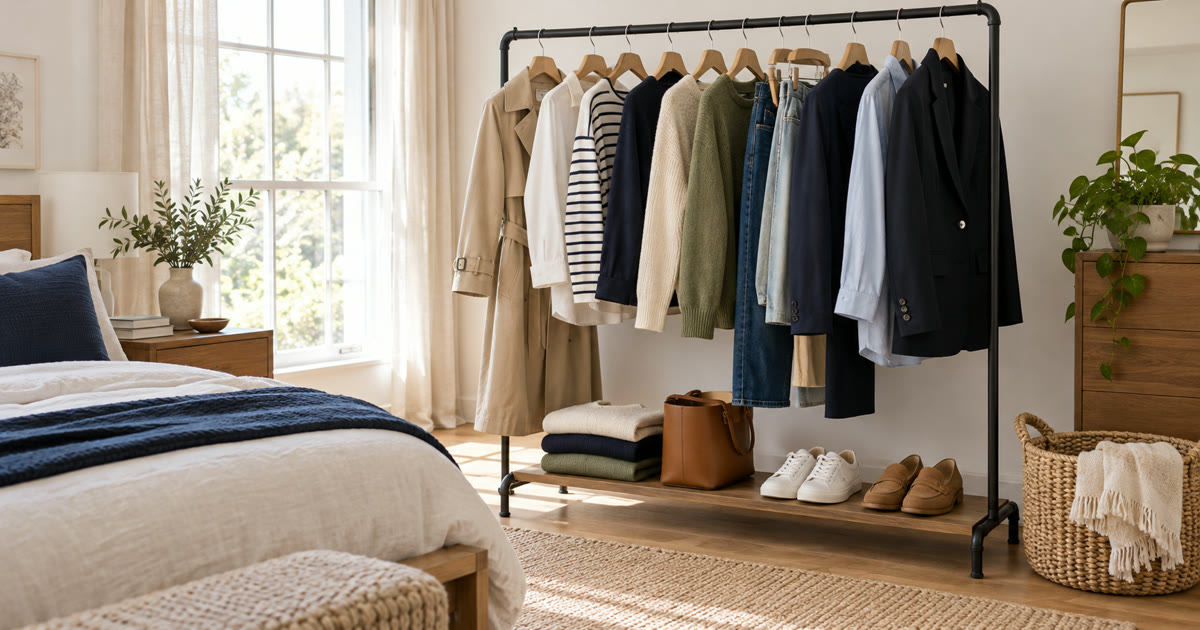
A capsule wardrobe is a smaller group of clothes that works for the life you actually live. It does not need a fixed number of pieces, a beige color scheme, or a shopping trip. The useful question is whether the items you keep can make enough outfits for your ordinary week. A person who works outdoors, attends formal events, or needs several sizes during a body change will need a different capsule from an office worker. Start with use, not an internet checklist.
Map one ordinary week before touching the closet
Write down your usual situations: work, errands, exercise, social plans, weather, and anything requiring a uniform or specific dress code. Next to each, note how many days it occurs and what you comfortably wear. This short map prevents a common error: building a beautiful collection for an imagined life while leaving your real mornings unsolved.
For example, if you work remotely four days and visit clients once, your comfortable work layers may need more space than formal blazers. If laundry happens every two weeks, two tops will probably not be enough. If the climate swings, include practical layers rather than forcing a single-season formula. These are constraints, not failures of style.
Make three piles based on actual wear
First, pull out the clothes you have worn and enjoyed in the last few months. These are your starting set. Second, place useful but difficult pieces in a trial pile: perhaps pants that need hemming or a shirt you cannot pair. Third, separate items that are damaged beyond repair, no longer fit comfortably, or belong to a lifestyle you no longer have. You do not have to donate a sentimental piece to make the exercise work; store it separately if it matters to you.
Look for patterns in the first pile. Which silhouettes let you move easily? Which fabrics can you maintain? What colors appear more than once? The personal style guide can help you name a direction, but your repeated choices are stronger evidence than a label. Record what you wear rather than what a checklist says you should want.
Build outfits, then count pieces
Put together five outfits for actual situations next week. Lay each out, including shoes and an outer layer if needed. Photograph them or write down the combinations. Now ask what is doing multiple jobs. A shirt that works for two work outfits and a weekend outfit is more useful to you than a theoretically versatile item you avoid wearing.
Only after this test should you count the pieces. Your number is a result of your schedule and laundry rhythm. A workable capsule may include repeats because you prefer the same shape of top in several colors. If one item is uncomfortable, do not call it a “core piece” just because it matches other garments. Fit and comfort determine whether an outfit will be repeated.
Use a practical capsule wardrobe checklist
- Situations covered: Does the set dress you for the week you mapped, including weather and required dress codes?
- Enough clean clothes: Does it last until your normal laundry day?
- Outfit pairs: Can each regular-use item join at least two outfits you would really wear?
- Care: Can you wash, dry, or maintain the items with the time and budget you have?
- Fit: Can you sit, walk, and work comfortably in each outfit today?
- Personality: Is there room for colors, prints, or accessories you enjoy?
- Repair and storage: Are any gaps actually mending or visibility problems rather than shopping needs?
Treat this as a test, not a pass/fail score. A special-occasion garment may have only one role and still deserve its place. A wardrobe is meant to serve you, not meet an arbitrary mathematical rule.
Decide whether a purchase solves a real gap
After two weeks of wearing your trial capsule, write down each moment when you could not make an appropriate outfit. Specify the missing function: “rainproof layer for commuting” is clearer than “more basics.” Check whether an item in your trial pile could be repaired, altered, or styled differently first. If a purchase is still warranted, look for something that works with several outfits already proven in your rotation.
Do not buy a set of so-called essentials in one order. That can replace a functioning wardrobe with a generic one. Consider your existing color palette and choose a color you will wear repeatedly. Buying secondhand or borrowing for a rare event may also be sensible, depending on access and budget.
Keep the capsule flexible
Review your outfit photos when the season, job, or body changes. Swap pieces in and out rather than rebuilding from zero. A capsule can include more clothes than someone else's if that makes it functional; it can also remain a small section within a larger wardrobe. The goal is less friction when dressing, with fewer unused purchases. Your best measure is whether you can get dressed for the next seven days without inventing a new problem to shop away.