Outfit Color Combinations You Can Make With Your Own Clothes
Color advice often starts with a wheel and ends with a shopping list. A faster way to dress is to examine three colors you already own and test how they look together in the light where you will wear them. There is no universal pair that flatters every person or feels right in every setting. Your goal is to find a few repeatable combinations that fit your taste and the clothes available today.
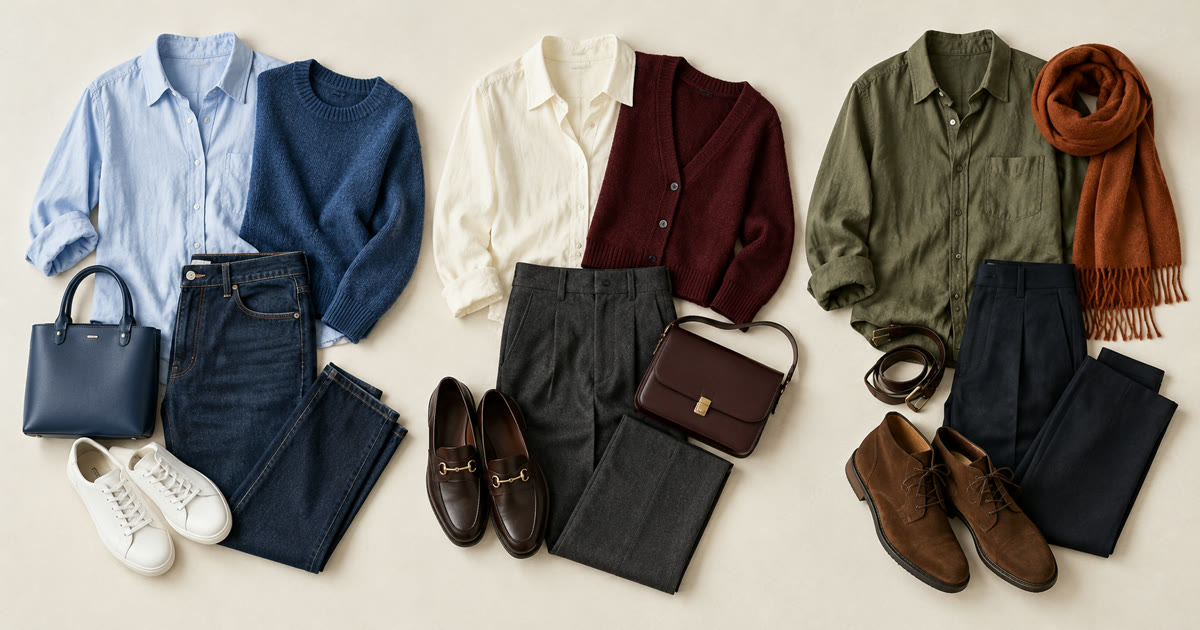
The illustration above shows the three formulas side by side: pale and deep blue for a tonal look; cream and charcoal with a burgundy accent; and olive with a rust scarf against dark trousers for contrast. Adapt them with clothes you own rather than treating them as a shopping list.
Start with a base, a companion, and an accent
Choose one garment you wear often as the base. It might be navy pants, olive trousers, a denim skirt, or a patterned dress. Add a companion color from a top or layer. If the outfit feels unfinished, use one smaller accent in a shoe, scarf, bag, or accessory. You do not have to use three colors every time: a two-color outfit may already be complete.
Take a photo before deciding. A combination that seems loud on a hanger may look balanced when worn because each color occupies a different amount of space. Likewise, two muted pieces can compete if their undertones or textures feel wrong to you. Assess the whole outfit, including shoes and outerwear, rather than judging isolated swatches.
Formula 1: tonal shades of one color
Combine lighter and darker versions of a color you already like: light blue with deep denim, pale olive with dark green, or cream with warm brown. Tonal dressing can feel calm without requiring perfect color matching. Variation in texture keeps the outfit from appearing flat: a cotton shirt, knit layer, and denim trousers bring different surfaces even when their colors are close.
If two shades nearly match but clash to your eye, add a neutral between them. A white tee under two blues, for example, can make the difference look deliberate. Try this formula when you want a quiet outfit for work or a day when you do not want to think hard about coordination.
Formula 2: neutral base plus one accent
Pick two low-key pieces already in your closet, such as charcoal trousers and an off-white shirt, then add one stronger color. The accent could be a burgundy cardigan or cobalt bag. This is a useful first experiment if you like color but feel overwhelmed by combinations. It also helps you test whether a bright item is genuinely wearable before buying more of that shade.
“Neutral” does not have to mean beige or black. Denim, olive, chocolate, navy, and cream may function as neutrals in a wardrobe because you already pair them often. The test is practical: does the item make several real outfits? For a closer look at what you naturally choose, use the StyleFind color palette guide.
Formula 3: deliberate contrast
Contrast can come from color, value, or saturation. A light top with dark pants is a simple value contrast. A muted green shirt with a rust accessory offers color contrast without being neon. A bright red knit against dark denim makes the accent more prominent. You can turn the contrast up or down by changing how much of each color is visible.
When trying a new pair, hold both pieces next to your face and then step back from the mirror. If the color attracts attention in a way you enjoy, keep it. If you keep adjusting it or wish it were less prominent, choose a smaller accent. A diagram cannot decide your comfort level for you.
What about prints and patterns?
Pull one color from the print and repeat it elsewhere in the outfit. A floral shirt with blue details might work with your existing blue jeans; a checked skirt with brown lines can pair with a brown sweater. The repeated color creates a visible connection. Another option is to keep the rest of the outfit quiet and let the print do the work.
Avoid forcing every color in the pattern into a separate item. That often makes an outfit harder to assemble and may turn a simple printed piece into a shopping project. When in doubt, choose one supporting color and test it in daylight.
Build your personal combination list
Photograph five outfits you enjoy, then write their color formula in plain words: “navy + cream + rust” or “olive + denim.” Note where each outfit works and whether you stayed comfortable all day. After a week, keep the formulas you actually repeated. This gives you a quick reference for busy mornings and makes it easier to spot true wardrobe gaps.
If you are unsure where to start, choose the piece you reach for most and make three alternatives around it. The personal style article can help you connect these choices to silhouette and occasion. Color should support how you dress, not require a new identity.